Who Is William Thomas?
I am an award-winning West Coast Canadian journalist and author of Scorched Earth, Bringing the War Home, Chemtrails Confirmed, All Fall Down: The Politics of Terror & Mass Persuasion and Days of Deception: Ground Zero and Beyond. Isle of Light and Sanctuary are my photo books feature landscape and wildlife photographs of Hornby Island.
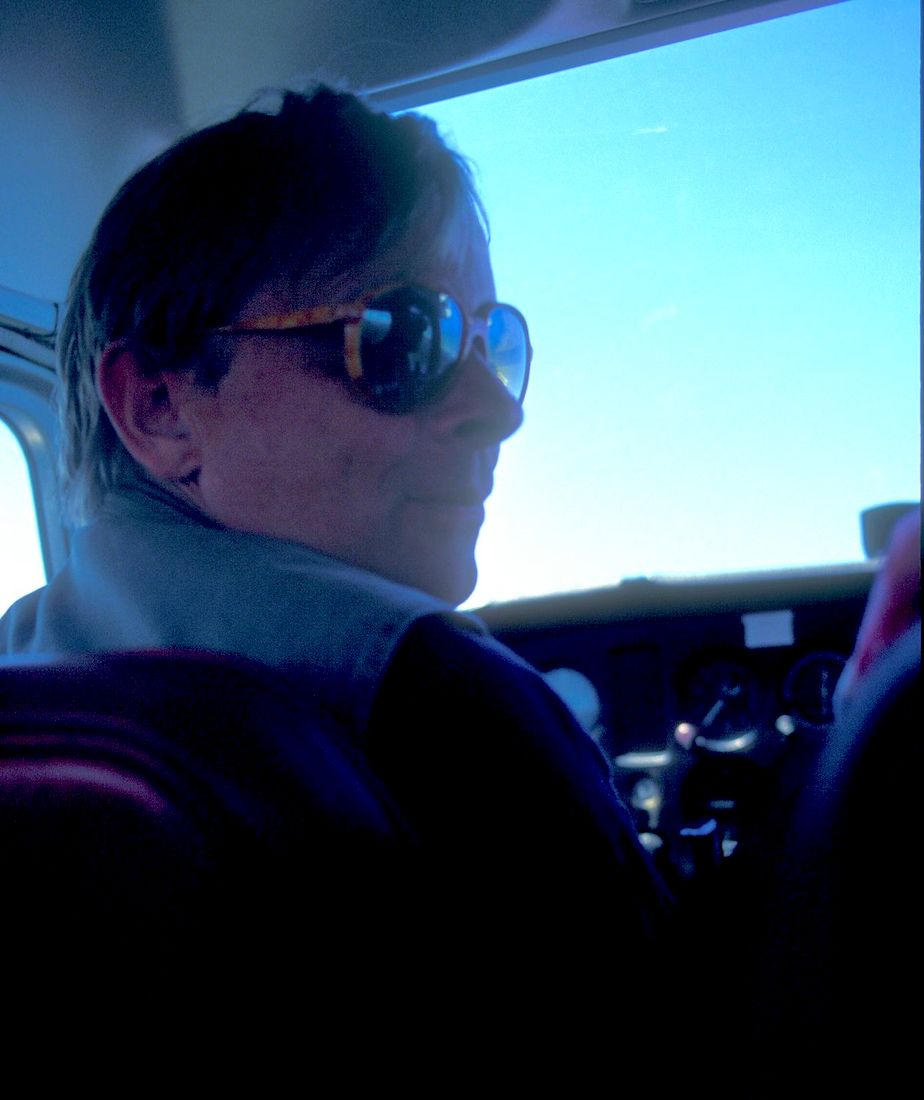
The son of a career US Navy pilot, I am also a Michigan boy who lived in Florida, Wisconsin, Tennessee and California. I soloed a Cessna when I was 16. Five years later, for the first and only time, I briefly took the controls of a US Navy T-34 Mentor during a familiarization hop over the Florida panhandle.
This was during the tumultuous ‘Sixties, when I was learning my craft of photojournalism on the streets of Milwaukee and Chicago, as well as the music and mud of Woodstock. While studying journalism, theology and philosophy under the Jesuits at Marquette University, I co-founded and from 1967 to 1970 co-edited the widely-read off-campus publication, PITH magazine.
In 1970, while attending NROTC at Marquette University and leading anti-war demonstrations, I received long-coveted orders to to begin flight training at Pensacola NAS — only to give up my lifelong dream of carrier flying and resign my U.S. Navy Reserve commission over the slaughter in Vietnam. With the help of the Quakers, I made my way to the "centre" of US expat anti-war resistance at Rochdale in Toronto.
This political refugee became a Canadian citizen in 1975. Moving out west "to find a boat", I instead fell in with the right crowd and learned 16mm filmmaking under the tutelage of Byron Black at Vancouver’s Free University while assisting with his feature film,“The Master of Images”.
I went on to co-found Canada’s first west coast photography gallery, The Mind’s Eye, at 52 Water Street in Gastown. Three years later, after serving a one-year apprenticeship, I won a dream job as a full-time “photog” on Canada’s top photo-illustrated daily newspaper, The Vancouver Sun.
But I wanted to shoot color. So I adopted an 31-foot Kismet orphaned in a Gabriola Island backyard and persuaded an adventuresome women named Thea to help me complete that trimaran by promising to take her to Tahiti. "I've heard a lot of lines from a lot of guys, but I've never heard that one," she told me.
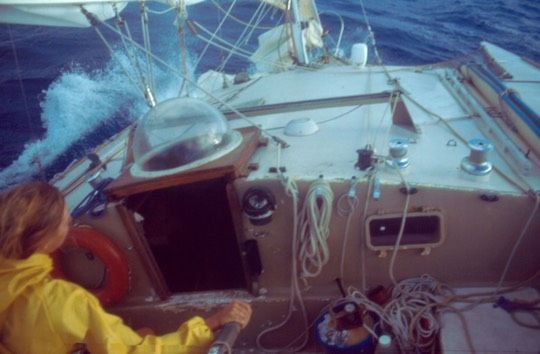
We made it to Papeete and a few other places besides, surviving two hurricanes offshore and bluffing our way out of a pirate attack in the South China Sea by following Nelson's dictate to "go right at them!" Seven years later, Celerity fetched Japan, where Thea left the boat to return to the States to finish her studies.
How to get home? Sailing 4,800 miles nonstop to Canada the following year with a master pianist onboard, Hiromi Nogi became the first Japanese woman to cross the Pacific Ocean under sail. And Celerity became the first multihull to make the North Pacific crossing. Her eight-year Pacific circumnavigation covered 40,000 sea miles, equivalent to nearly twice around this watery world at that equator.
Now what should I do? On returning to British Columbia, during the last day of a solo vision quest in BC’s Coast Mountains, I received my mission: to defend and speak for the voiceless ones.
Back on Salt Spring Island, I co-founded the Green Islands Society, served as a Greenpeace photographer, and led a citizens’ march on the Crofton pulp mill. Appearing in Monday Magazine, my nationally illustrated article, “Pulp And Poison” exposed alarming cancer clusters in the neighbourhood around that decrepit mill.
I was then sent by Salt Spring residents to the Fletcher Challenge AGM in Auckland to protest the Crofton pulp mill’s DNA-warping dioxin emissions. In a nationally televised debate, denials by the CEO of New Zealand’s favorite company were derailed by my video of that mill’s sky-filling pollution playing in the background. Green Islands’ efforts resulted in FC spending tens of millions of dollars in pollution controls. (I was later “recognized” by Fletcher Challenge Canada with a SLAPP suit for helping oppose their clearcut logging in the Walbran. They lost.)
Seeking to protect my home waters, I next co-founded the Georgia Strait Alliance before sailing Celerity to conduct the first environmental survey of the Georgia Basin.
With 98% of Vancouver Island’s old growth rainforests already turned into a clearcut moonscape, Green Islands next led a five-week clearcut-logging blockade on Salt Spring’s Mount Bruce.
I later served on blockades in the Walbran, Tsitika and Clayoquot Sound. Pioneering the grass roots distribution of environmental video clips to provincial and national television, my aerial footage of MacBlo’s illegal logging in a Royally protected stand of old growth in the Carmanah sparked a provincial uproar after an independent surveyor hired by Green Islands confirmed the trespass. I was next hired to film and produce three successful TV “spots” for the BC Green Party, Friends of Clayoquot Sound and Bear Watch.
"Who are The Real Criminals?” achieved wide coverage for correcting blatant media distortions of a summer-long protest in the Clayoquot that saw the arrest of 800 supposedly “fringe” people — including grandmothers, a lawyer and a logger. Suggesting, “If you must shoot a bear, use a camera,” my “bear snuff” ad was picked up and commented on by television networks and newspapers across Canada.
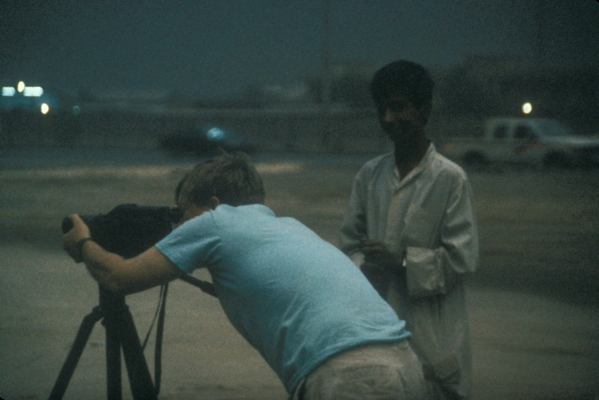
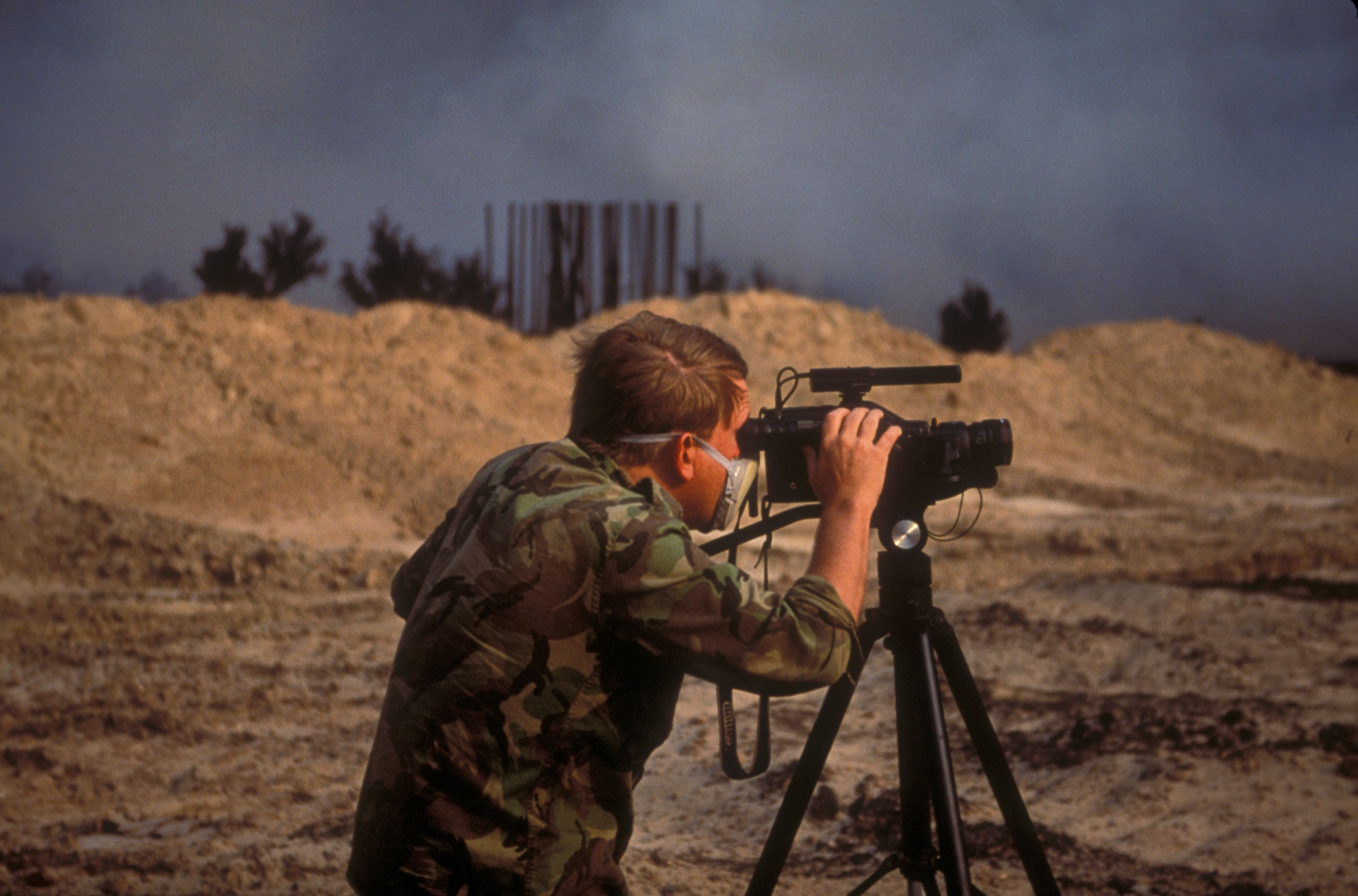
Soon after Scud missiles began exploding in Tel Aviv, with his soon-to-be-cancelled credit card and $30 between us, Vancouver artist Carl Chaplin and I boarded the last commercial flight into Jordan on a private peace mission to sound a warning against nuclear detonations in a gathering Desert Storm. After receiving a private briefing from the King’s scientific advisers on the impending demolition of Kuwait’s extensive oilfields, Carl and I founded the Gulf Environmental Emergency Response Team.GEERT raised funds to fly me into Bahrain, where I assisted that government's response to the world’s biggest oil slick washing ashore in beaches and mangroves. After smuggling a forbidden camcorder into Dammam, I approached the Saudi Environmental Agency and became the only cameraman allowed on two Royal Saudi Air Force overflights to document blazing wellheads and the world’s biggest oil spill.
Hammered out on a borrowed Royal typewriter, my dispatches to Environment News Service appeared worldwide. Other articles appeared under my byline in the Globe & Mail and Toronto Star.
In Bahrain, I was contacted by two members of Earth Trust, who arranged for a U.S. Navy aircraft to fly me through a thick “oilcast” into a Kuwait City surrounded by oil fires. Though unable to save oiled seabirds despite repeated forays into mined and burning oilfields, the Royal Saudi Air Force laid on a Puma helicopter for us to conduct the first aerial survey of 1,100 burning and gushing wellheads.
Setting up an environmental coordination centre in the city’s only functioning hotel, our three man team daily briefed government, health and U.S. military officials, before successfully lobbying the Kuwait government to open their fire-fighting monopoly from just two companies to the many experienced teams crowding our centre. As a result, the oil fires were extinguished 11 months ahead of schedule.
But my ENS stories sent over the city’s only functioning fax line were being monitored. “What are you doing?” asked the Kuwait secret police after “inviting” me in for an interview. “Telling the truth,” I replied. Unable to respond, they let me go.
By then I was seriously ill from five weeks of oil smoke, minefield stress and possible depleted uranium munitions dust. Nevertheless, I managed to prepare the first Environmental Impact Study of the 20th century's biggest environmental disaster, before briefing returning members of Kuwait’s Royal Family at their request.
Using a donated Hi-8 camcorder, my documentary “Eco War” went on to win the 1991 U.S. Environmental Film Festival award for “Best Documentary Short”. Excerpts of my exclusive footage appeared on CNN and NBC television and in Noam Chomsky’s movie, “The Corporation” before appearing in an eight-part CBC Gulf War mini-series.
Back home, more gunplay ensued. The only cameraman allowed into the besieged Shuswap encampment at Gustafson Lake, I worked with the manager of the Red Coach Inn to successfully abort an impending massacre by tactical RCMP after a native leader named Wolverine told me he intended to “scatter the embers” of rebellion throughout Canada’s First Nations. When the CBC broke our agreement by airing my “bang bang” footage without accompanying explanations by people in the camp who were protecting their shaman from armed locals, Wolverine put out a contract on my life.
Fortunately, I was seen as a “friendly” subpoenaed witness in court after my video footage enabled the media-smeared “renegades” and “terrorists” to explain their story and their motivations for the first time. During a break in the proceedings, I shared a laugh with my would-be assassin when the young buck described getting stopped by the RCMP while speeding toward his cash reward with a bag of pot and an assault rifle on the front seat!
Around this time, ENS asked me to check out mysterious lines in the sky. I subsequently popularized the term, “chemtrails”, while breaking and documenting that story through repeat appearance on Art Bell’s radio show heard by more than 15 million listeners. TIME magazine later called our segments the most popular series on Coast To Coast.
Before my "semi-retirement," I also appeared on CBC TV News and As It Happens, as well as national television in Holland and New Zealand.
More recently, I co-founded the Concerned Residents of Hornby Island to defend our community from determined attempts by Canada’s biggest cable corporation to inflict unwanted cell tower radiation on every creature in our island sanctuary.
After a hard-fought three-year campaign, which seriously impacted my health, we won.
Winner of four Canadian feature and investigative writing awards, my writing and accompanying photography have appeared in more than 50 periodicals in eight countries, with translations into French, Dutch and Japanese.Thank you for your interest in my work!
William Thomas
April 2026
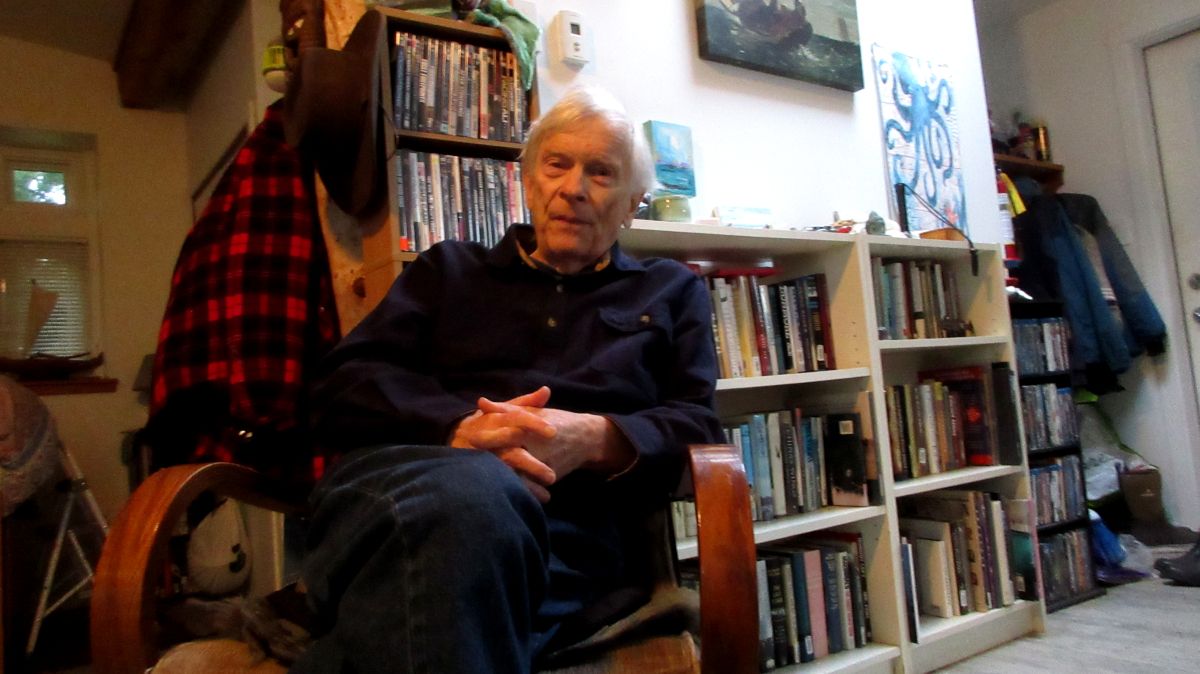
Photo Credits
William Thomas filming in Kuwait City at noon during the Gulf Eco War -Michael Bailey photo
The author flying a Cessna 172 over Vancouver Island -photographer unknown
Thea racing a typhoon into Guam -Will Thomas photo
The author filming "Eco War" in the burning Great Bergan oilfield -Michael Bailey photo
William Thomas at home -King Anderson photo