FIRST SAIL
by William Thomas
Sailing
Next thing I know, we’ve moved into a brand-new spit-level house perched above Spring Lake, within daysailing distance of Lake Michigan…
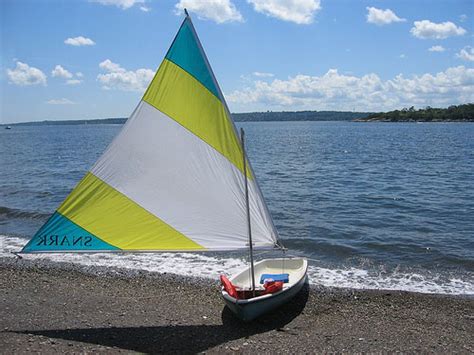
Water slaps the seawall, chuckling invitingly to a barefoot 14-year-old boy. Produced from some secret repository known only to fathers, an 11-foot Sea Snark drops from his hand to smack the lake like an oversize Dixie Cup hitting a bath.
“Hop in,” my dad invites. I scramble aboard, the Styrofoam hull rocking like my childhood Tommy Tippy cup as I shift to make room.
“Come on, dad.”
“Be home for dinner,” he commands. And shoves me off.
I’m so shocked, I forget the breeze. The next gust snatches the lateen sail, slamming the boom outboard, perpendicular to the aluminum mast. The boat jack-rabbits downwind. Grabbing the tiller (you can’t live on a lake with a navy dad and not know about tillers), I just manage to intercept the mainsheet before it whistles overside.
Candy-cane nylon bellies into a hard-fisted curve. When I risk a glance astern, I am stunned to see my father’s tiny figure waving like King Ferdinand to this dubious Columbus from a fast-receding shore.Water splashes gayly along the Sea Snark’s rounded Styrofoam hull. Scudding fast across the lake, I focus on holding a course that will not let the wind get behind the sail. The How To Sail pamphlet my father had suggested I study warns that an “accidental gybe” will dump me in the drink.
Eventually, my miniature Pinta bangs into the opposite shore. Jumping into knee-deep water, I spin the 50-pound craft around and shove off. Dock and dinner are shockingly distant. Worse, my home port lies directly upwind. Clambering back aboard, I haul in the boom and point us homewards. The sail shakes furiously. The boat “backs up” — another revelation — turning off the wind along the rudder’s inclination.
I center the helm, trying to recall what came next in my 11-page sailing guide. The sail fills with a crack. The lake tilts and I sit upright on the hull, leaning outboard to compensate. Now my destination lies off to the right — to starboard in sailor speak.
But every time I pinch into the wind, the sail starts shaking again. “Luffing” the book calls it. Apparently, I can “tack” through the wind’s eye, and resume sailing on the opposite tangent, bracketing my destination. Like any successful recipe, repeat until done.
Tentatively tugging on tiller and mainsheet, listening to the run of the wash and observing the Sea Snark’s instant response, this fledgling learns the rudiments of sailing that afternoon from the best teachers of all — boat, water and wind.
I do make it back in time for my next meal. But not many after that.
When I finally stop sailing that first year, ice is forming on the lake. Capsize would be fatal.
But by then, boat and boy are one.
Photo Credit
Snark sailboat -sailboatstogo.com