CARRIER APPROACH IN A CESSNA
by William Thomas
The closest I ever got to flying off carriers as a fledgling midshipman was sitting in the front seat of a grounded F-4 Phantom (which seemed as big as a B-25 and probably was). And later walking Yorktown's flight deck at dawn while covering Marquette’s NROTC drill team during Mardi Gras in New Orleans.
The only overhead carrier-style approach and landing I ever flew was in a Cessna…
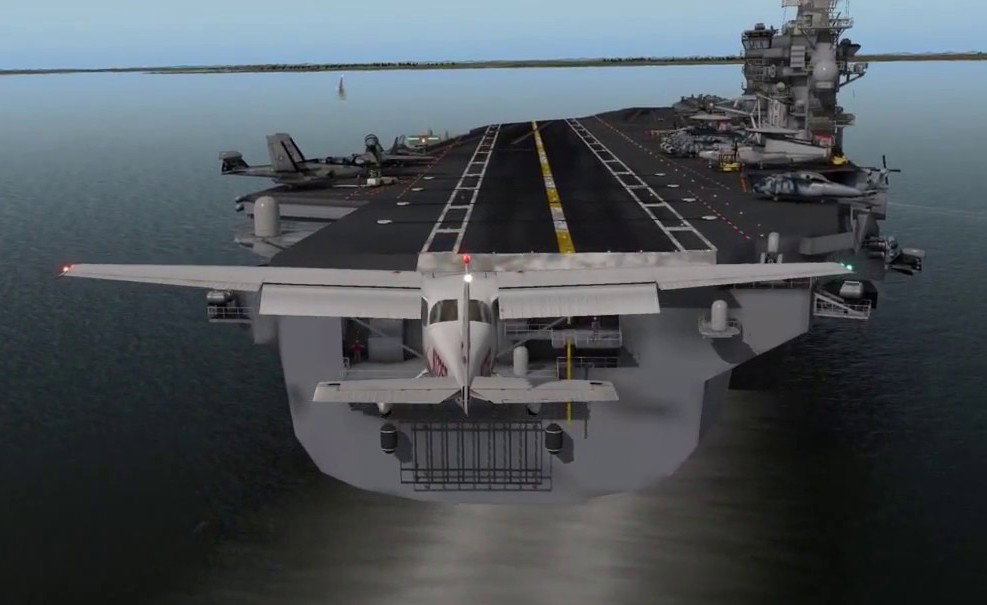
Flying into Victoria International Airport one blue sky afternoon, the tower broke into my fat, dumb and happy reverie to ask if I could "expedite your landing for commercial traffic on long final."
Since I was still on my downwind leg and had not yet turned towards the runway a thousand feet below my right wing, this was an interesting request. The proper response would have been a laconic Steve Canyon-style, “Rog”.
But having reacted immediately to the tower’s challenge, I was already too busy for chit-chat. Even as I clicked the mic button twice, I was pulling on carb heat, chopping power, and raising the nose to bleed off airspeed to safe flap lowering speed.
I was also stomping on the right rudder pedal and rolling the always-willing 150 into a steep descending right turn, titling the ground below like a funhouse ride and courting yet another classic fatal stall-spin crash as the Cessna’s drastically increased wing-angle to the onrushing airstream sent the airplane’s stall speed rocketing upwards towards exceeding my current airspeed.
No worries. Pushing the airplane's nose down with my left hand to prevent the sharp pitch-up that follows sudden and drastic flap extension, with my other hand I reached down to the long lever on the floor beside my seat and pulled it all the way up like a buggy brake.
Whoa Nelly! The airplane sagged as if it had flown into an invisible air bag in the sky. (This “old fashioned” instant and precise flap response was why I preferred Two Two Tango’s “obsolete” flap handle to her rental sister’s more “modern” — and slower — electronic flap switch.)
Like a startled pony, the two-seat trainer tried to pitch up. Only to find a firm hand on the reins.
Though everything was happening much faster than usual, I had to stay relaxed and ahead of the airplane. In a normal “right downwind” approach, you fly toward the end of the runway and start letting down before passing the runway threshold. (Mind that crosswind drift wafting you toward or away from the runway.) At an appropriate distance beyond your landing spot — a turn point determined by experience or student pilot guesswork — commence a descending 90-degree turn toward the runway. Hold your 500-foot-per-minute descent rate and level the wings. Motor along on this base leg until it's time to make another right-angle turn, rolling out with the runway — hopefully — somewhere over the nose. If you‘re too high or low, reduce or add power. Without further fuss or drama, simply continue flying the airplane on down to the ground. Remembering not to crash, of course.
Easy peasy, right?
I’d always wanted to try an overhead carrier-style approach. Now I was being asked to perform this maneuver for real!
Yeah, baby. Instead of flying the standard “square” base leg and leisurely turn onto final, this close in the new plan was to commence an uninterrupted circling descent all the way to touchdown. This involved juggling more fast-changing aerodynamic variables than I was used to, as I worked to keep airspeed, altitude, rate-of-descent and bank angles within landing limits as the ground rushed and rotated towards me.
Sideways.
With those big Fowler flaps extended all the way aft and down, (increasing wing area and drag, while drastically lowering stalling speed), the baby Cessna came down like a Dauntless at Midway.
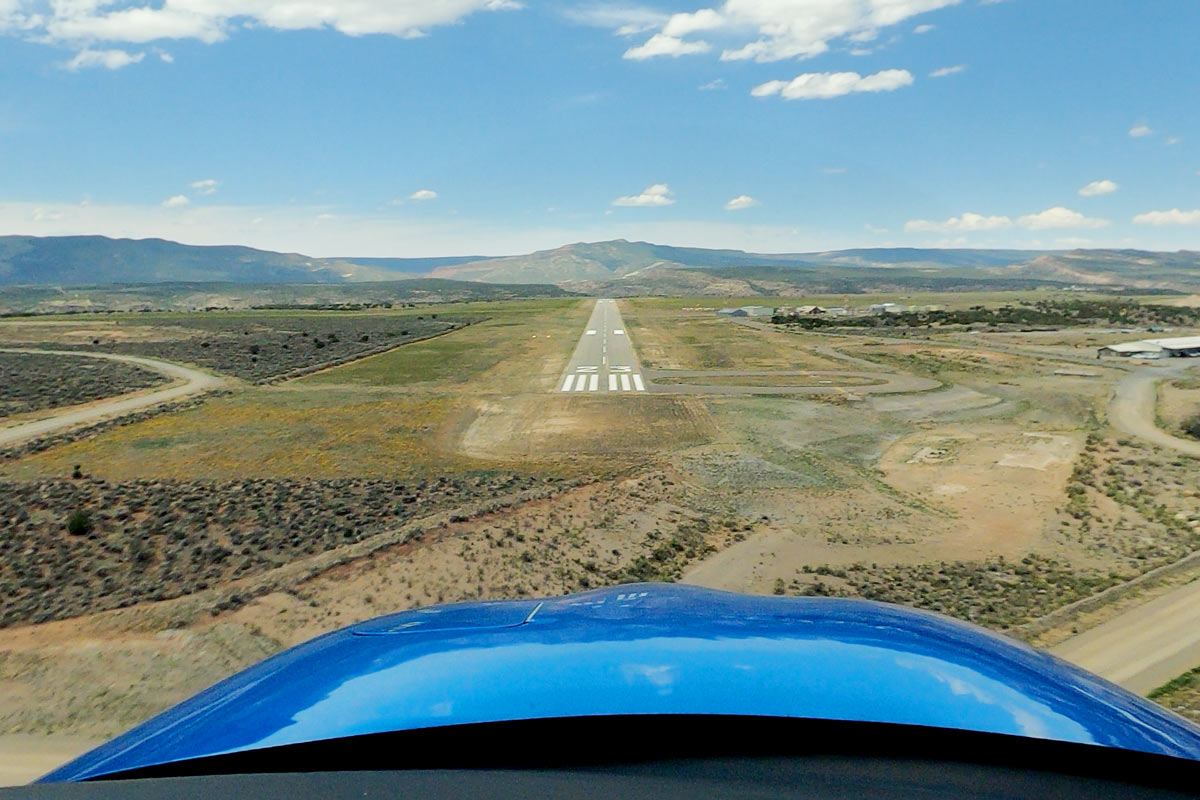
Did I mention that everything was happening at the double-quick, all at once, in multiple dimensions? Having waited so long for this opportunity, my body had melded with Two Two Tango. Aiming well short of the runway, I leveled off just shy of the weeds and crammed on full power, dragging the “draggy” airplane toward the fast-approaching goal line.
Clattering low over the approach lights on their sturdy raised metal stanchions, I started the flare just as the runway threshold passed beneath the Cessna's wheels. Definitely not a standard — or even an approved carrier — approach. But hey, I’d been asked to “expedite”. And an ultra short field landing seemed called for.
The stall warning horn began beeping intermittently, as if unsure of what was going on. I ignored it. Leveling off perhaps six-inches above the fleeting concrete hidden beneath Two Two Tango's bright red cowling, I chopped the power. Barely hanging on its prop, the Cessna 150 instantly stopped flying.
A sharp jolt and we were down. Through sheer blind luck and the grace of the humoring gods, I’d dropped the airplane onto the runway right on the undershoot stripes, well short of the numbers. The rumble of the main gear came like applause after this action-packed denouement to another hour aloft.
No time to celebrate. I still had to clear the runway for the big guy coming up behind me.
Feeding in left aileron to compensate for a slight left crosswind, I pulled the yoke into my chest to unload the nose gear as I jabbed both toe brakes hard — released — and got on the binders again. At the same time, having nothing better to do, I pushed off the carb heat, reached down, and fully retracted Mr. Fowler's big beautiful "barn door" flaps to kill any residual lift.
But Two Two Tango was all done aviating. As the Cessna slowed to a walking pace, I made the first turnoff, which was not really intended as an exit from this direction as most airplanes coming in would be past it when their pilots started braking. But hey. With Air Canada's time and money at stake, a fledgling flier's gotta honor his government's request.
The commuter jet that touched down and whistled past me saved a ton of Jet A, not to mention disgruntled paying passengers, by not having to go around. Before I could call the tower to announce my whereabouts and request the frequency change to Ground Control for taxi clearance back to the aforementioned barn, they beat me to it.
Their "attaboy" thank you broadcast over the tower frequency for everyone in the area to hear blew what was left of my sweaty mind. Professional tower controllers rarely compliment pilots. Except when one of them pulls off a near-flawless short field approach and landing on special request.
Five decades later, this sweet feeling of accomplishment still warms my memories.
Photo-Captions
Landing a Cessna on an aircraft carrier -youtube.com
Short field approach -boldmethod.com
Full Disclosure: My father was a naval aviator in the Pacific and Korean wars.